
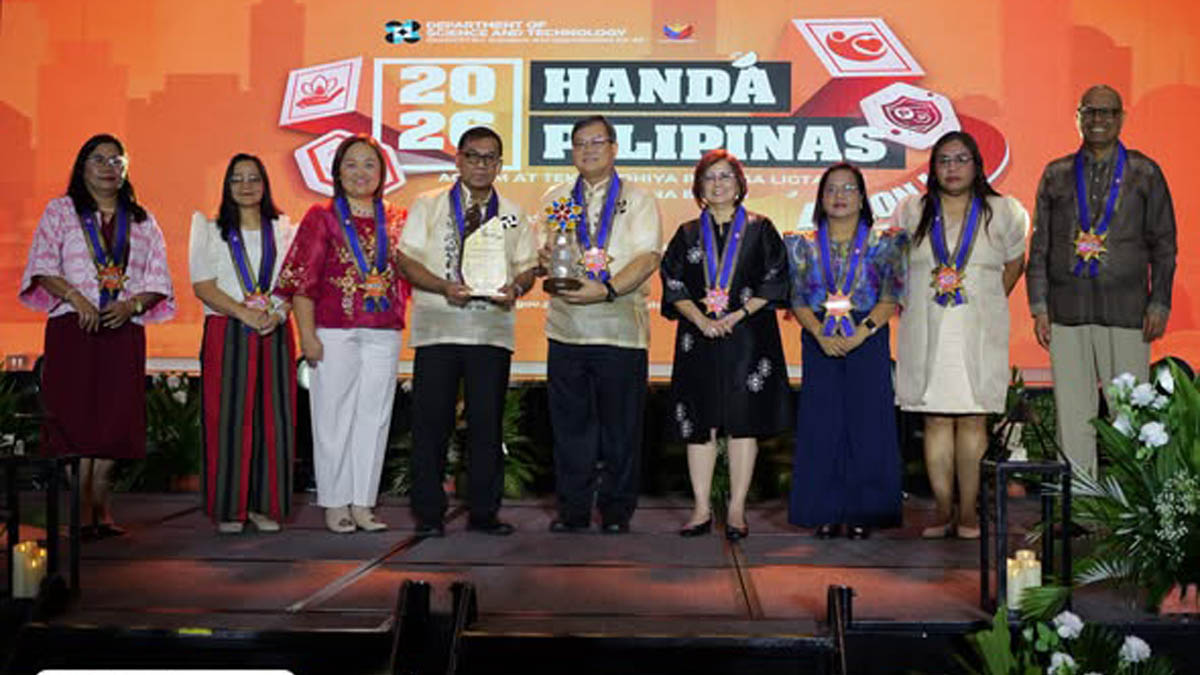
The Department of Science and Technology (DOST) officially opened the Luzon leg of Handa Pilipinas 2026 on October 26 at the SMX Convention Center, SM Clark, Mabalacat City, Pampanga, bringing together government agencies, local government units (LGUs), disaster risk reduction and management (DRRM) practitioners, academic institutions, and private sector partners to strengthen disaster preparedness through science, technology, and innovation.
Carrying the theme “Agham at Teknolohiya para sa Ligtas at Matatag na Bayan,” the three-day event showcases science-based technologies and initiatives designed to help communities anticipate hazards, improve emergency response, and recover more effectively from disasters.
DOST Secretary Dr. Renato U. Solidum Jr. emphasized that early warning systems must go beyond issuing alerts and ensure that people receive and understand information in time to act.
“An alert is only useful if people see it. A warning is only meaningful if people understand it,” Solidum said, stressing that timely and accessible information is essential in protecting lives and livelihoods from typhoons, floods, landslides, and other hazards.
Meanwhile, DOST Central Luzon Regional Director Dr. Julius Caesar V. Sicat, who also serves as the Handa Pilipinas project leader, underscored that the initiative’s success should not be measured by the number of technologies displayed, but by how these solutions are adopted and integrated into local governance, community preparedness, and decision-making.
DOST Undersecretary for Regional Operations Engr. Sancho A. Mabborang likewise reaffirmed the department’s commitment to bringing practical science and technology innovations closer to communities, helping them prepare for hazards, respond to emergencies, and recover from disasters. He expressed hope that Filipinos would emerge from calamities better prepared, safer, and more capable of rebuilding through science, technology, and innovation.
In his message of support, Mabalacat City Mayor Gerald Guttrie P. Aquino highlighted the importance of investing in disaster preparedness, emphasizing that science-based solutions and stronger partnerships are essential in anticipating risks, protecting livelihoods, and securing the future of communities.
Among the initiatives featured are the use of GeoRiskPH for hazard mapping and early warning across all 125 local government units in the Ilocos Region, and training on the Rapid Earthquake Damage Assessment System (REDAS) to strengthen local capacities in assessing potential earthquake impacts.
Other regional innovations include Central Luzon’s Mobile Command and Control Vehicle (MOCCOV), equipped with communication systems, drones, satellite phones, and a medical triage unit; the solar-powered SIGAW tsunami warning technology in CALABARZON; Project MOSES in MIMAROPA for localized weather information and alerts; and the Unsinkable Porta Boat in the Bicol Region, which supports evacuation and emergency operations.
These initiatives demonstrate how science-based solutions can address different disaster risks and community needs, while strengthening coordination among government institutions and local responders.
Through Handa Pilipinas 2026, DOST continues to encourage LGUs to adopt appropriate technologies, strengthen the capacities of DRRM personnel, and integrate scientific tools into their local disaster risk reduction and management plans.
The event runs for three days, providing participants opportunities to explore disaster preparedness technologies, exchange knowledge, and establish partnerships toward building safer and more resilient communities. (NELSON SANTOS)