ni NIÑO ACLAN
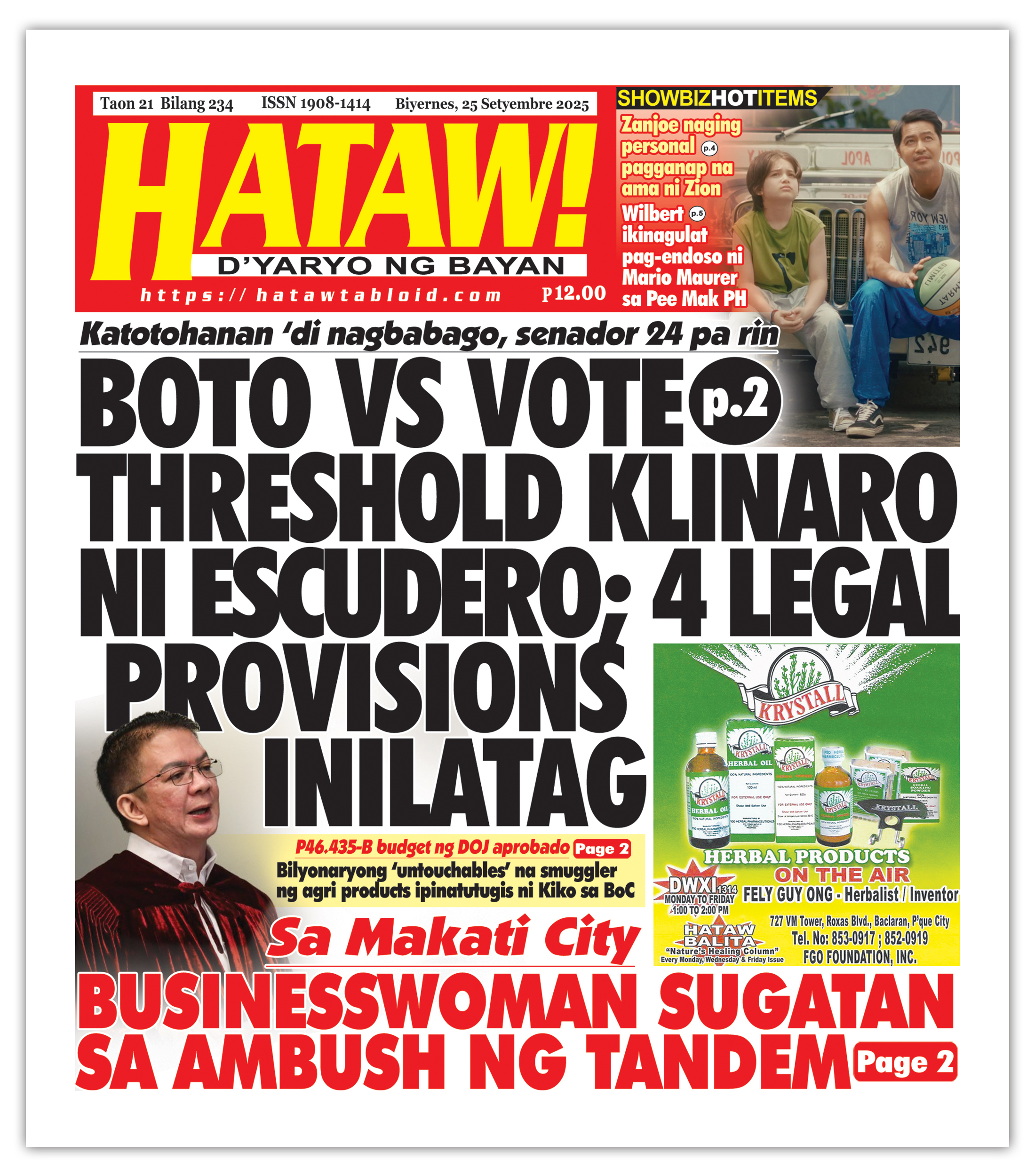
NAGLATAG si Impeachment Court Presiding Officer Francis “Chiz” Escudero ng apat na legal provisions kung bakit tumanggi siyang bomoto sa pagpapababa ng vote threshold base sa aktuwal na bilang ng senador na dumadalo sa impeachment trial.
Matatandaang nitong Miyerkoles, nagwagi ang apela ni Senador Erwin Tulfo sa botong 13-1 para tukuyin ng impeachment court ang 2/3 vote threshold sa “all members of the Senate” upang ma-convict si Vice President Sara Duterte.
Ngunit, bomoto si Escudero laban sa pagpapababa ng conviction threshold sa impeachment trial ni Duterte, alinsunod sa kanyang ruling noong 6 Hulyo, kailangan ang 16 boto para ma-convict sa ilalim ng Konstitusyon.
Bomoto ang Senado, nakaupo bilang impeachment court, ng 13 pabor, isa ang tumutol, at anim ang hindi nakilahok sa motion ni Sen. Erwin Tulfo na muling silipin ang threshold rule.
Binigyang-diin ni Escudero na ang interpretasyon ng Korte ay gagana lamang bilang pro hac vice, o “for this occasion only,” at hindi magiging binding sa mga susunod na impeachment proceedings.
“This has never happened before, and the Chair hopes that it shall never happen again,” aniya, na binigyang-diin ang extraordinary circumstances na humantong sa ruling.
Sa pagpapaliwanag ng kanyang boto, sinabi ni Escudero na dapat i-apply ng impeachment court ang Article XI, Section 3(6) ng 1987 Charter ayon sa plain language nito.
“The Chair stands by his July 6 ruling. Article XI, Section 3(6) of the Constitution must be given its plain and literal meaning. The Chair finds no basis in the constitutional text for interpreting it otherwise,” sabi ni Escudero sa Senado na nakaupo bilang impeachment court.
Naglatag siya ng apat na dahilan sa pagtanggi sa alternatibong interpretasyon ng voting requirement.
Una, binanggit ni Escudero na sadyang inalis ang salitang “present” sa 1987 Philippine Constitution, kahit na lumabas ito sa US version kung saan hinango ang probisyon.
“The word ‘present’ was omitted from the 1935 Constitution, even if it was originally contained in the first complete draft of the 1934 Constitutional Convention. And it was never restored in the 1973 nor the 1987 Constitutions,” aniya.
“In other words, the word ‘present’ was intentionally omitted and has remained absent from our Constitution ever since. What the Constitution has omitted, for me, cannot now be restored by interpretation,” dagdag niya.
Pangalawa, iginiit ni Escudero na hindi dapat malito ang membership sa Senado sa kakayahan o eligibility ng isang senador na bumoto. Aniya, ang pagliban o incapacity ay hindi nagbabago sa katotohanan na ang Senado ay binubuo ng 24 miyembro, gaya ng itinakda ng Article VI, Section 2.
Pangatlo, nagbabala siya na ang pagpapababa ng denominator ay lilikha ng fractional votes at tinawag niyang absurd outcomes. Aniya, kung babawasan ang denominator nang paisa-isa, mas magiging madali ang conviction kaysa acquittal — isang resultang hindi umano intensiyon ng framers ng Saligang Batas.
Ipinaliwanag ni Escudero, kung babawasan ang denominator sa kakaunting bilang na apat mula sa 24 senador, mas madalas na bababa ang boto na kailangan para ma-convict kaysa boto para ma-acquit.
“The conviction threshold falls 13 times, while the acquittal threshold falls only seven times. In other words, a variable denominator makes it easier to secure a judgement of conviction compared to a judgement of acquittal,” aniya.
Pang-apat, binanggit ni Escudero ang prinsipyong “in dubio pro reo,” na nagsasaad na ang tunay na pagdududa ay dapat iresolba pabor sa akusado.
Aniya, hindi dapat gawing mas madali ang conviction sa pamamagitan ng implikasyon o inference kapag ‘constitutionally doubt’ pa.
“Terminating an elected mandate before the end of its term is among the most drastic acts our constitutional democracy can undertake. Therefore, when the Constitution fixes the conditions and number for imposing a judgment of conviction, those conditions should not be relaxed by implication, nor should the number rise or fall according to the contingencies of the day,” aniya.